-
Prophet Mohammad, exemplar of the best morals
سهشنبه ۴ مهر ۱۳۹۱ ساعت ۹:۰۵
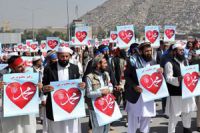
The spirituality crisis is one of the main crises in the west. Undoubtedly the attention that Islam pays to the deep spiritual aspects of man can fill the gap of spirituality in the west. But the western politicians who have well understood this magnetic force try to hinder the spread of Islam via Islamophobia. The last example of Islamophobia in the US was the production and release of the film insulting Prophet Mohammad (SAWA). We are going
The spirituality crisis is one of the main crises in the west. Undoubtedly the attention that Islam pays to the deep spiritual aspects of man can fill the gap of spirituality in the west. But the western politicians who have well understood this magnetic force try to hinder the spread of Islam via Islamophobia. The last example of Islamophobia in the US was the production and release of the film insulting Prophet Mohammad (SAWA). We are going to give a very brief introduction of the luminous personality of the holy prophet. Stay with us. The prophet of Islam was the great man who taught affection, generosity and freedom to mankind. The prophet came for cleansing human soul from vestiges of corruption and became a model of justice and equity. In his final speech while he was seriously ill, the prophet expressed the best words on human dignity, human rights and freedom of expression. These are the things that today the west wants to teach with flawed instructions. In his farewell sermon, the holy prophet addressed people, “Whoever has a right upon me either forgive me or seek retaliation so that my calculation is not left for the day of resurrection.” The prophet was the absolute power of the Arabian Peninsula and people deemed him so sacred that they used to rush to gather the drops of his hands after ablution; yet such a great personality spoke to people so humbly. In the middle of the messenger’s sermon suddenly a person named Sawada ben Qais stood up and said, “Once while returning from the battle front my camel came beside yours. You whipped your camel but it struck my back and I don’t know whether it was intentional or not.” The prophet replied, “I seek the refuge of God; it was not deliberate. Do you forgive me or seek retaliation against me?” Sawada said, “I seek retaliation.” The holy prophet said, “Bring the whip from home.” The grand prophet humbly got ready for whipping, but the man said that his shoulder had been bare. The holy prophet also bared his shoulder and the man kissed his shoulder saying, “I was seeking a chance to kiss your shoulder.” Prophet Mohammad (SAWA) taught Muslims that officials of government should speak humbly and politely to people and should not speak to them from an upper position. The historian Ebn Masoud, who lived in early years after the advent of Islam, says once a man was trembling while speaking to the holy prophet. The awe and grandeur of the prophet had impressed him. The prophet realized said, “Take it easy my brother. I am not a king.” Prophet Mohammad (SAWA) would sit on the ground like ordinary people. Imam Ali (AS) said, “God's Messenger would accept the slaves' invitation for lunch; he would sit on the soil; he milked livestock with his own hands. He was very humble; he would never stretch his legs even before children; when somebody came up to him he would never lean on something. He was always hungry; he looked weak but his heart was strong.” The holy prophet of Islam would get angry just for God’s sake and Islam. If someone's right was trampled, the prophet got very angry. He feared no one till he returned the right to the owner. But whenever the prophet was disrespected, he would never think of revenge and he would skimp the flaws of others and forgive them. After conquering Mecca, despite long years of torture and oppression by Quraish pagans, he forgave all of them and said, “Today there is no blame upon you. God forgives you and He is the most Merciful of the merciful.” Thus the prophet released all his old enemies.” God Almighty appointed Mohammad Mostafa as prophet at the time when paganism and ignorance had encompassed the world. In a society where the bodies of innocent girls were buried and women were treated as slaves, the holy prophet said, “No one except the mean persons insult women.” He attached such a great respect for women that once the people of Medina pledged allegiance with him, he said women should pledge allegiance, too; although their husbands said their wives followed them and there was no need to their allegiance. At that time, an ayah was revealed stipulating that men should not pledge allegiance instead of women and it should be done separately. Prophet Mohammad (Blessings of Allah upon him and his household) taught women their socio-political responsibility. What makes this more significant is the fact that till one century ago women in western societies had not had the right of voting. Despite his great position the prophet would sit so simply beside his companions that if a person entered he could not recognize the prophet. Therefore he would ask, “Which one of you is Mohammad?” Whenever the holy prophet entered a gathering he used to sit at the first empty place rather than searching for a special place. God's messenger did not let anyone stand up before him and he respected all. He used to speak succinctly and meaningfully and he never interrupted others’ words. God's apostle never uttered harsh words and he was so good-tempered that people considered him a very affectionate father. Prophet Mohammad (SAWA) paid much attention to the needy. While returning from Tabouk battle to Medina, an old man named Sa'd Ansari was among those who welcomed the prophet. Upon shaking hand with him, the holy prophet understood that the old man's hands were very coarse. Sa'd was asked why his hands were so coarse. He answered that he was a worker and he shoveled the ground to make money. God's messenger raised the old man’s hand so that everybody could see it. Then he brought it down and kissed it. He raised the old man's hand again and told the crowd, “By God, this is the hand which the hell fire will never touch.” Campaign against superstitions was another characteristic of prophet Mohammad (SAWA). When the holy prophet's son Ibrahim passed away in childhood he wept a lot. Some of the companions said, “God's messenger should not cry for the death of his child.” The holy prophet said, “I cry but I do not complain since this is against monotheism. My heart is broken, my eyes shed tears, but I face death correctly. I have emotions. A father who does not cry on his child’s death is not a true father.” The same day a solar eclipse happened. A rumor prevailed that the eclipse was due to the heaven’s mourning for the prophet’s son. The holy prophet instantly gathered the people and said to the people, “O people today's eclipse is the sign of the divine grandeur and has nothing to do with Ibrahim's death. Eclipse never takes place for the death or birth of anyone; so whenever you see it perform prayers.” Thus the messenger of God not only stood against superstitions but he took advantage of the incident for upgrading people's understanding of monotheism. The prophet of Islam was a Godwary person who revealed truth with the logic and smashed the foundation of falsity through his faith. He extinguished the misleading call of the Satan and spread benevolence where there was nothing but destruction, ugliness and mischief. But the westerners, through presenting a false image of Prophet Mohammad (SAWA) and undermining the picture of Islam, intend to hinder people's ever-increasing attraction toward this great religion. God says in ayah 54 of surah Al-e-Emran: "And they planned and Allah (also) planned, and Allah is the best of planners." Therefore the enemies of Islam will get no result of producing a blasphemous film against the messenger of mercy and affection, Prophet Mohammad (Blessings of God upon him and his progeny).
مقاله
شماره مطلب: 20935
دفعات دیده شده: ۴۸۷ | آخرین مشاهده: ۱ ساعت پیش